 M&M Tank Coating Company
 When it comes to long lasting, high performance coatings, nothing matters more than how well the surface was prepared. For industrial and municipal storage projects the single most important part of the preparation process is abrasive blasting for tanks. This critical step removes rust, old coatings, contaminants, and creates the right surface profile so coatings can stick and perform for years.
In this article we will walk through why abrasive blasting for tanks matters so much before applying a coating and what steps lead to durable adhesion. If you are responsible for tank maintenance or replacement you want the information that separates good prep from failed coatings.
What is Abrasive Blasting for Tanks
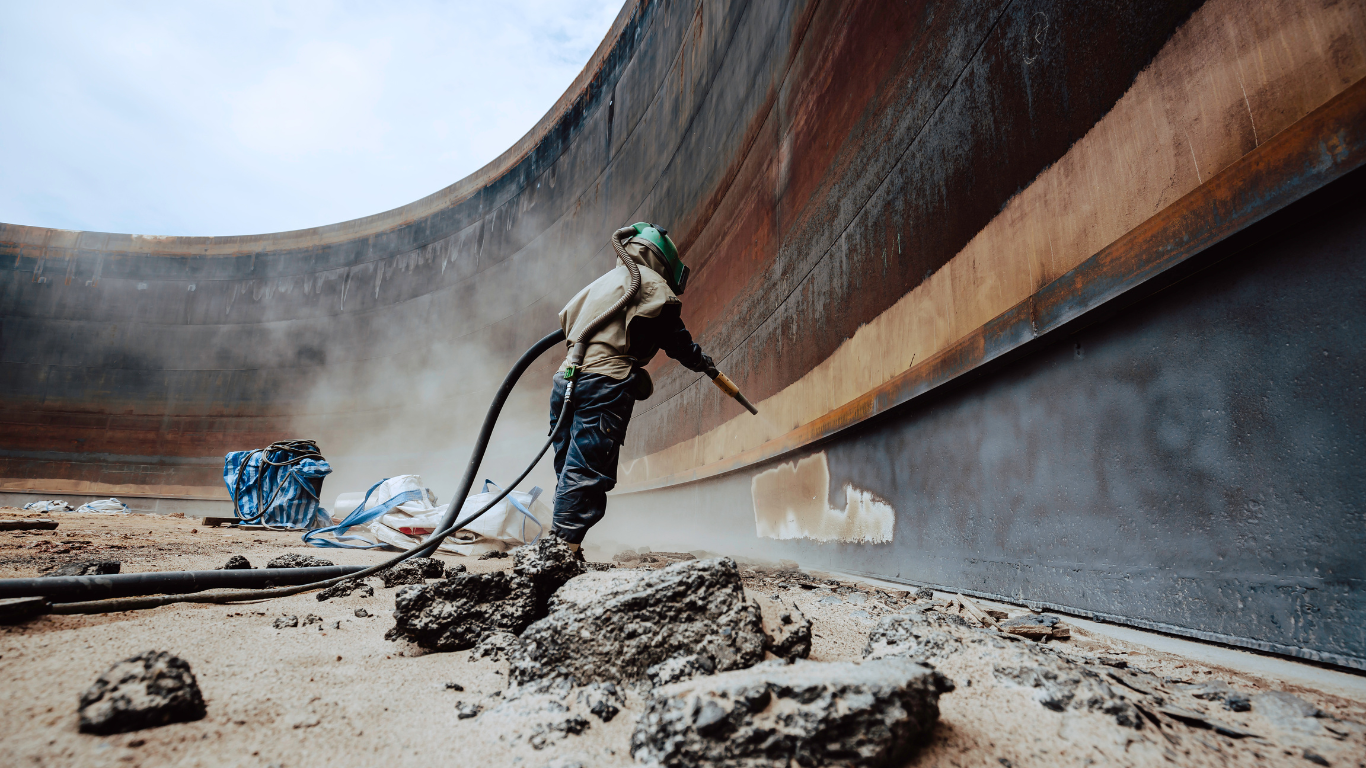
Abrasive blasting for tanks is a surface cleaning process that uses a pressurized stream of abrasive media to strip a tank’s interior or exterior down to a clean, roughened surface profile. This surface profile is important because coatings need something to grab onto. Smooth, dirty, or rusted surfaces weaken adhesion and reduce service life.
There are different types of abrasive media such as steel grit, aluminum oxide, and garnet. The choice depends on the type of metal, coating specification, and the condition of the tank surface.
Why Pre Coating Preparation Matters
Coating manufacturers carefully design coating systems with specific performance expectations in mind. These expectations assume surface cleanliness and roughness fall within an accepted range. If starting conditions do not meet the recommended standard, the coating cannot perform as designed.
With abrasive blasting for tanks, technicians remove:
-
Loose rust and corrosion
-
Old or failed coating layers
-
Scale and weld spatter
-
Grease and oil contaminants
Without a clean surface these elements get trapped under the coating. This leads to premature failures like blistering, peeling, or rust creep.
Step by Step Tank Surface Preparation
Here are the necessary steps that make abrasive blasting for tanks a reliable and repeatable preparation method:
Step 1: Jobsite Assessment
Before any work begins a trained technician inspects the tank. They check for structural issues, corrosion, and determine the type of surface contamination present. This informs the selection of blasting media and equipment settings.
Step 2: Containment and Protection
Proper containment and environmental controls protect people and nearby equipment. Dust, debris, and used blasting media are contained to comply with regulatory and safety standards.
Step 3: Media Selection and Equipment Setup
Not all abrasive media are the same. Choosing the right media for abrasive blasting for tanks ensures the surface profile is correct and the steel substrate is not damaged. The blasting equipment is then set up to deliver consistent pressure and coverage.
Step 4: Blasting Operation
During the blasting operation trained operators work systematically across the surface. The goal is surface cleanliness aligned with industry standards such as AMPP. The result is a surface that is free of loose particles and exhibits a uniform profile.
Step 5: Surface Inspection
Post blasting inspection uses visual and measurement tools to confirm the surface profile and cleanliness. If standards are not met technicians return to blasting before coating can begin.
How Abrasive Blasting Affects Coating Adhesion
When a tank surface is properly prepared through abrasive blasting for tanks the coating that follows bonds mechanically to the profile peaks and valleys. This creates strong adhesion. Good adhesion is critical for protecting assets from corrosion, chemical exposure, and environmental stress.
Consider this analogy. Painting over a dusty wall or a wall with peeling paint rarely holds. Grinding down to the solid surface makes the paint stick. Abrasive blasting for tanks works on the same principle but with industrial precision.
Common Mistakes to Avoid
Even experienced maintenance professionals can make mistakes that compromise the benefits of abrasive blasting for tanks. These include:
-
Choosing the wrong abrasive media
-
Rushing the blasting process
-
Skipping final inspection checks
-
Not accounting for humidity or environmental conditions
Each of these can weaken adhesion and shorten the service life of a coating system.
Why Choose an Expert for Abrasive Blasting
For industrial and municipal clients, abrasive blasting for tanks is not a weekend project. It requires trained operators, correct equipment, and a quality control process built into every step. At M&M Tank Coating Company professionals handle abrasive blasting and coating applications with precision and attention to industry standards.
This level of preparation helps coatings perform better, prevents rework, and ultimately protects your asset value. If you have questions about preparing your tanks for coating contact the experienced team at M&M Tank Coating Company to learn how professional abrasive blasting ensures top quality adhesion.